Your on-line source for reliable and unbiased information about the evaluation & treatment of heart disease.
When is a Regular Stress Test ordered?
How is an Isotope Stress Test performed?
Preparing for the test?
How long does it take?
How safe is it?
What is the reliability of the test?
How quickly will I get the results?
How does an Isotope Stress Test Work? How does a Chemical Stress Test work? A chemical or pharmacological stress test combines an intravenous medication) with an imaging technique (isotope imaging or echocardiography) to evaluate the LV. In these cases, the medication serves the purpose of increasing the heart load instead of using exercise. Stress causes normal coronary arteries to dilate, while the blood flow in a blocked coronary artery is reduced. This reduced blood flow may decrease the movement of the affected wall (as seen by echo), or have reduced isotope uptake in a nuclear scan. Agents that are commonly used in pharmacologic stress testing include dipyridamole, dobutamine and Adenosine (Trade name).
When is a Chemical Stress Test Performed? Treadmill stress testing is the test of choice when a patient is able to exercise because of the physiologic effect that exercise has on the blood pressure and heart rate. It also helps give the physician an idea about the patient's exercise tolerance and whether or not exertion has any adverse effects on the patient's symptoms or irregular heart beats. Additionally, one does not have to contend with any potential side-effects of chemical stress, even if they are usually minor.

However, exercise may not be possible because of physical limitations like back trouble, joint disease, marked fatigue, unsteady gait, prior stroke, dizziness, shortness of breath, etc. In such cases, chemical stress testing is employed. In other words, pharmacologic or chemical stress test is performed in situations where patients are unable to perform more than moderate exercise due to severe arthritis, prior injury, reduced exercise tolerance (as a result of debilitating illnesses, etc.), or in patients who are unable to increase the heart rate (as in some with heart pacemakers or in the setting of certain diseases that keep the heart from speeding up).
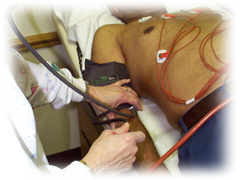
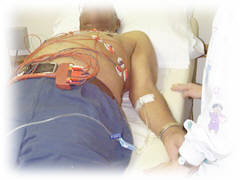
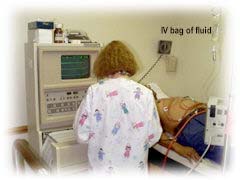
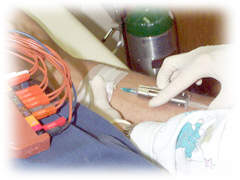
How is a Chemical Stress Test performed? The imaging portion of the test is identical to that used during Stress Echocardiography or Isotope Stress Testing (depending upon the technique employed) and is performed either in a cardiologists office, a satellite lab or the hospital. An intravenous line is started in the arm, the blood pressure is checked and an EKG recorded. The EKG is also constantly monitored on the screen. If Stress Echo is being performed, an echocardiogram is obtained before and immediately after administration of the stress producing medication. In cases of stress isotope testing, the resting images may be obtained before or approximately two hours after the stress (depending upon the lab and the employed isotope). The stress-producing medication is given intravenously, as per protocol. In cases of dobutamine, drug is given as a continuous drip with a gradual increase in the rate (at three minute intervals). The patient's heart rate accelerates and the isotope is given when 85% of the target heart rate is achieved. In cases of dipyridamole, the medication is usually given over four minutes, through the IV line. A drop in the diastolic (lower number) blood pressure is generally awaited before administration of the isotope.
If a patient is able to perform mild exercise, he or she may be asked you to walk on a treadmill for a minute or so after the injection of dipyridamole.
Preparing for an Isotope Stress Test: The following recommendations are "generic" for all types of cardiac stress tests:
- Do not eat or drink for three hours prior to the procedure. This reduces the likelihood of nausea that may accompany strenuous exercise after a heavy meal. Diabetics, particularly those who use insulin, will need special instructions from the physician's office.
- Caution about asthma: The use of dipyridamole is generally avoided in patients with asthma. Please be sure to notify your physician if you have a history of asthma, bronchitis or emphysema.
- Specific heart medicines may need to be stopped one or two days prior to the test. Such instructions are generally provided when the test is scheduled.
- Wear comfortable clothing and shoes that are suitable for exercise.
- An explanation of the test is provided and the patient is asked to sign a consent form.
How long does the entire test take? A patient should allow approximately two to four hours for the entire test, including the preparation. Dual isotope and technetium stress testing takes less time than thallium. The first part of the test generally takes an hour. The second part takes anywhere from 15 to 30 minutes. Between the two parts of a thallium test, you will be allowed to leave the lab and get a light snack or lunch.
How safe is a chemical Stress Test? The patient is exposed to a very small amount of radiation and the risk is minimal, if any. The risk of the chemical stress portion of the test is very small and similar to what you would expect from any strenuous form of exercise (jogging in your neighborhood, running up a flight of stairs, etc.). As noted earlier, experienced medical staff is in attendance to manage the rare complications like sustained irregular heart beats, unrelieved chest pain or even a heart attack. In such cases, the patient is better off having the problem in the presence of experienced staff, rather than have it happen when they are exercising alone. Also, the stress medicine like Dobutamine can be immediately stopped if there are problems, The effects of dipyridamole (which can occasionally cause nausea or a headache can be reversed by aminophylline (an anti-asthma medication). Please also see the caution about asthma under the "Preparing..." section.
What is the reliability of a Chemical Isotope Stress Test? If a patient is able to achieve the target heart rate in cases of dobutamine or an appropriate drop in the diastolic blood pressure with dipyridamole, and if good quality images are obtained, an isotope treadmill stress test is capable of diagnosing important disease in approximately 80% of patients with coronary artery disease. Approximately 10% of patients may have a "false-positive" test (when the results is falsely abnormal in a patient without coronary artery disease). Technical problems can occur when a patient is markedly overweight. Women may have an abnormality in the front portion of the heart because of overlying breast tissue. Some men may demonstrate an inferior wall abnormality because of a prominent diaphragm (muscular partition that separates the chest cavity from the abdomen. Patients who have a left bundle branch block on their EKG may also have a false abnormal test.
How quickly will I get the results and what will it mean? The physician performing the stress test can give you a preliminary report about the EKG and Echo (if it is used) portion of your test. However, the official result from the isotope scans may take a few days to complete. The results may influence your physician's decision to change your treatment or recommend additional testing such as cardiac catheterization.

©1999-2017, 20XXA.S.M. Systems, Inc. All Rights Reserved, including design and all graphic contents & animations