Your on-line source for reliable and unbiased information about the evaluation & treatment of heart disease.
Atherosclerosis begins with the deposition of fatty streaks on the inner lining of the artery. Additional deposits lead to a bulky atheroma that begins to encroach into the channel of the coronary artery. Fibers begin to grow into the atheroma causing harder plaques. The plaque of atherosclerosis may develop a crack on its surface. This is known as plaque rupture which can result in the deposit of a blood clot at the site of the blockage. If the blood clot totally blocks flow to the heart muscle, a heart attack usually results.
However, if the clot causes a partial blockage, the patient may develop unstable angina. Such patients have prolonged, frequent and more severe episodes of angina. The discomfort may be the patient's first symptom (in which case it is called new onset angina). In other cases, stable angina gradually or suddenly changes into a pattern of unstable angina.
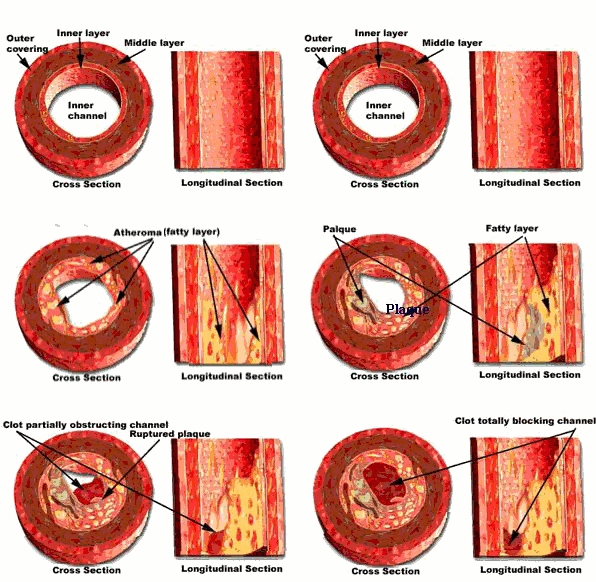
The chest discomfort of unstable angina may become more frequent, last longer, be more intense, be brought on by lesser degrees of exertion (compared to prior symptoms), appear at rest or even awaken the patient from a sound sleep. It is called unstable angina because many untreated patients end up having a heart attack. Unstable angina may also occur in the absence of a blood clot if the severity of the blockage (due to the atheroma and plaques) becomes severe enough to cause a drastic decrease in blood supply to the heart muscle.



©1999-2017, 20XXA.S.M. Systems, Inc. All Rights Reserved, including design and all graphic contents & animations