Your on-line source for reliable and unbiased information about the evaluation & treatment of heart disease.
First | 1 | 2 | 3 | 4 | 5 | 6 | Last
Click here for Multimedia Lecture on Heart Attack!
What is a heart attack?
How common is a heart attack?
What are the symptoms of a heart attack?
What should be done if a heart attack is suspected?
What happens when a heart attack patient arrives in the ER?
How does "clot buster" treatment compare with angioplasty?
Why is primary angioplasty and stent not used in every case?
What happens after the patient is admitted to the hospital?
What happens after the first day?
What are the complications of a heart attack?
What medications will be prescribed after discharge?
How should be done if a heart attack is suspected? When a heart attack occurs, it is extremely important to recognize 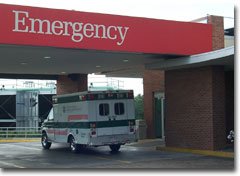 the symptoms and respond rapidly. Nearly 50% of patients suffering from a heart attack wait two or more hours before seeking medical help. This delay reduces the amount of heart muscle that can be salvaged with treatment, raises the amount of disability and increases the risk of sudden death.
A person experiencing symptoms of a heart attack should be rushed to the nearest emergency room that offers round-the-clock cardiac care. Each person needs to recognize that their symptoms of heart pain may be different from the classical pattern described here and else where. If chest discomfort occurs during exertion, the activity should be stopped and the person be advised to lie down.
How should be done if a heart attack is suspected? When a heart attack occurs, it is extremely important to recognize the symptoms and respond rapidly. Nearly 50% of patients suffering from a heart attack wait two or more hours before seeking medical help. This delay reduces the amount of heart muscle that can be salvaged with treatment, raises the amount of disability and increases the risk of sudden death.
A person experiencing symptoms of a heart attack should be rushed to the nearest emergency room that offers round-the-clock cardiac care. Each person needs to recognize that their symptoms of heart pain may be different from the classical pattern described here and else where. If chest discomfort occurs during exertion, the activity should be stopped and the person be advised to lie down.

If nitroglycerin tablets have been previously prescribed, a single tablet should be placed under the tongue and allowed to dissolve. if pain continues, take a second and third nitroglycerine tablet at five minute intervals. If pain is not completely relieved, 911 should be called. If time allows, notify the patient's physician so that he or she can make appropriate preparations for the patient's arrival in the emergency room.
What happens when a heart attack patient arrives in the ER? As noted earlier, a heart attack results when a coronary artery is abruptly and totally blocked. In the majority of cases, this occurs as a result of a blood clot. The goals of treatment are to quickly confirm the diagnosis, relieve the symptoms and open up the closed artery (with a "clot buster" medication or by means of angioplasty with or without stents).
Panoramic View of the Cardiac Section of an Emergency Room:
Move your move cursor within the picture to pan left and right or pause the rotation. You may also do so by placing the mouse cursor within the image and moving it left and right or up and down. Each open door reveals a typical room with ready availability of emergency devices and medications.
The initial evaluation of a patient with a suspected heart attack is usually accomplished within 10 - 20 minutes of arrival to the Emergency room.
Initial evaluation and treatment usually consists of:
-
History of illness is obtained by interviewing the patient and family. This helps the physician determine the likelihood and duration of the heart attack.
-
Physical Examination is performed, including recordings of the pulse rate, blood pressure, respiration rate and temperature.
-
EKG or electrocardiogram is a useful test in indicating the presence of a heart attack.
-
An intravenous line is placed.
-
Oxygen is started.
-
A nitroglycerin (NTG) tablet is placed under the tongue if the blood pressure is not too low. and the patient is continuing to have chest pain. Intravenous NTG may also be used in these cases.
-
Pain medication is delivered, usually via an i.v. line.
-
Aspirin is given by mouth.
-
Blood is drawn and sent "stat" to the laboratory. This helps confirm the early indication of a heart attack.
-
The safety and feasibility of using an intravenous "clot buster" medicine versus taking the patient to the cardiaccatheterization laboratory (if promptly available) is quickly assessed. If not contraindicated one or the other form of treatment is used in the majority of patients.
- A portable chest x-ray is commonly obtained, particularly if the patient is having shortness of breath. In some cases, an echocardiogram may be obtained in the emergency room to asses the size of a heart attack.
All the above measures may not be performed or needed in every case, and is individualized on the basis of the patient's symptoms and urgency of the situation.
The video shown above was taken, during cardiac cath in a patient with angina. It shows a 70% blockage in the proximal or beginning portion of the right coronary artery (RCA) as shown by the arrow. The patient desired medical treatment and did well for a year.. You can also switch between the gray scale and a colorized version by clicking on the button.
A year later, the same patient was admitted through the emergency room with a heart attack, Unfortunately, the patient continued to smoke and neglected his diet and exercise for several months. He was taken from the emergency room to the cardiac catheterization laboratory where the x-ray films showed total blockage of the right coronary artery. Click on the green arrow button to see how the blockage was treated in the laboratory.



©1999-2017, 20XXA.S.M. Systems, Inc. All Rights Reserved, including design and all graphic contents & animations