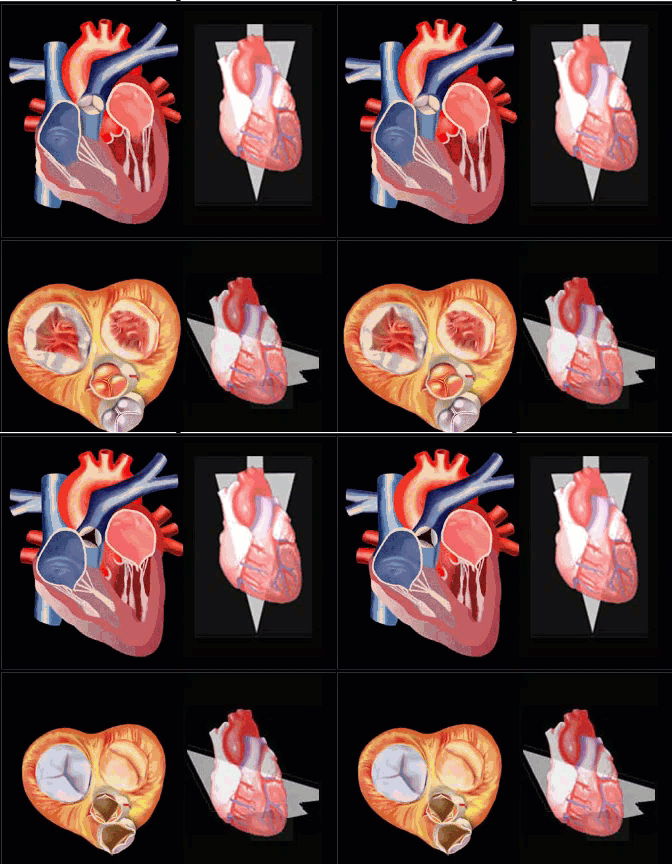
Next, we will show you the heart sections in the
frontal and top views again. However, the labels and
arrows will be removed so that you can use your imagination
to follow the flow of blood through the heart. As
you visualize the flow, name the various chambers,
valves, arteries and veins. Remember that ARTERIES
(pronounces art-trees) carry blood away from the heart.
The pulmonary arteries carry oxygen-poor blood to
the lungs, while the AORTA (pronounced ay-or-ta) carries
oxygen rich blood to the rest of the body. The tubes
that return blood to the heart are known as VEINS
(pronounced vaynes). The pulmonic (pronounced pull-monic)
veins return oxygenated blood from the lungs to the
left atrium. They connect into the back of the left
atrium.
The superior vena cava brings
oxygen-poor blood from the head, neck and arms to
the right atrium, while the inferior vena cava returns
oxygen-poor blood to the same chamber from lower portions
of the body. Remember that both the superior and inferior
vena cavae (cavae is plural for cava and is pronounced
cay-veeh). Yup! us docs have our own secret language
that originate from the Latin roots of medical terminology.
That is why the plural for cava is "cavae"
and not "cavas." Go figure!!
The superior vena cava connects to the top of the
right atrium (and hence the term superior) while the
inferior vena cava connects to the bottom of the chamber.
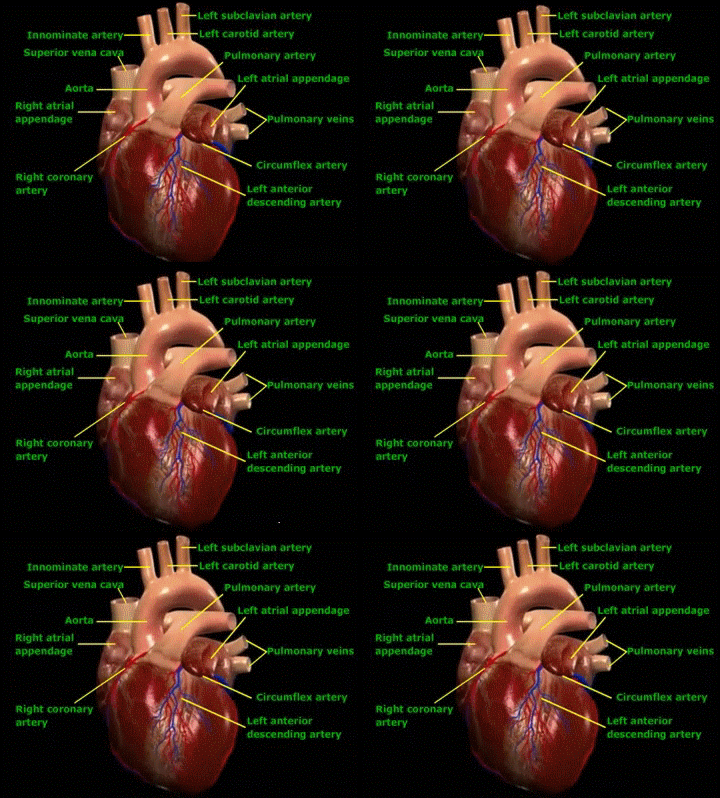
Shown below is the same
figure that was presented to you a few pages ago.
It shows the circulation of blood through the heart
and lungs.
Once again, no labels are
provided. If we have done our job, you should not
have any problems following the flow of blood. If
we have failed to clarify it for you, please accept
our apologies and go through the previous sections
again - if you so desire.